
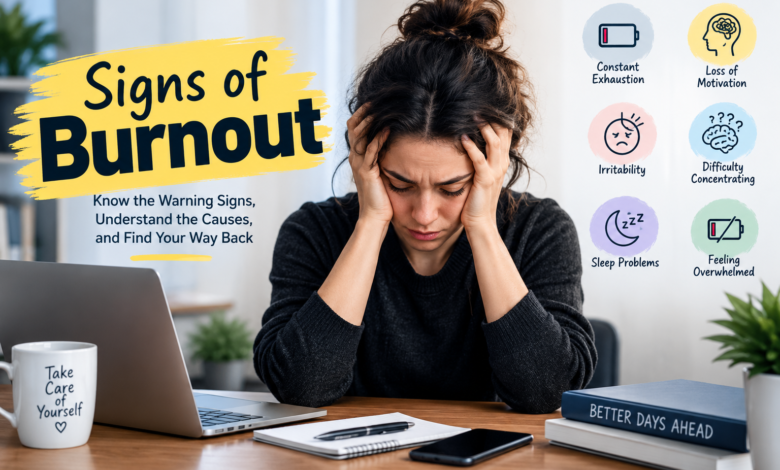
Signs of Burnout: Common Warning Signs, Causes, and Recovery Tips
Signs of Burnout: Common Warning Signs, Causes, and Recovery Tips

Feeling tired after a busy day is normal. However, constant exhaustion can be a different story. When stress continues for too long without enough recovery, it can affect your energy, mood, concentration, and attitude toward work.
The signs of burnout are not always obvious at first. Some people notice sleep problems, while others become more irritable or lose interest in work. In many cases, several symptoms appear together and gradually become part of everyday life.
Recognizing these changes early can help you understand what is happening and decide when it is time to make adjustments or seek support.
What Is Burnout?
Burnout is commonly associated with prolonged workplace stress that has not been successfully managed. The World Health Organization describes burnout as an occupational phenomenon rather than a medical condition.
It is characterized by three main areas:
- Feeling physically or emotionally exhausted
- Becoming increasingly negative or detached from work
- Feeling less effective or productive professionally
Burnout is different from having a stressful day or feeling tired after a demanding project. Temporary stress may improve once the situation ends. Burnout tends to involve a longer-lasting pattern.
10 Common Signs of Burnout
Several warning signs can appear when prolonged stress starts affecting your well-being. Not everyone experiences the same symptoms, but these are among the most common patterns.
1. Constant Exhaustion
Persistent tiredness is one of the most noticeable signs.
You may wake up after a full night’s sleep and still feel drained. Even ordinary responsibilities can require more effort than they used to.
A relaxing weekend might not seem enough to restore your energy. Over time, this exhaustion can make work and personal activities feel increasingly difficult.
2. Loss of Motivation
Tasks that once felt interesting may suddenly seem meaningless.
You might continue working because you have responsibilities, but the sense of enthusiasm is gone. Starting a project can feel difficult, even when you know exactly what needs to be done.
Small tasks may also feel unusually demanding.
3. Increasing Irritability
Long-term stress can make patience harder to maintain.
Minor problems may trigger stronger reactions than usual. A short email, unexpected request, or small mistake can become surprisingly frustrating.
Relationships may also be affected. You could find yourself becoming less patient with coworkers, friends, or family members.
4. Difficulty Concentrating
Another common warning sign is trouble focusing.
Reading an email may require several attempts. Important details can be forgotten, and simple decisions may take longer.
Frequent distractions can make the situation worse. As concentration decreases, unfinished work can accumulate and create even more pressure.
5. Negative Feelings About Work
Burnout can change the way you view your job.
You may become increasingly cynical about meetings, projects, management, customers, or coworkers. Even positive developments may fail to generate much excitement.
This emotional distance is one of the important dimensions associated with occupational burnout.
6. Declining Productivity
Working longer does not always mean accomplishing more.
Burnout can make ordinary tasks take longer. Mistakes may become more frequent, deadlines can feel harder to manage, and prioritizing work may become challenging.
A person may spend many hours working while completing less than expected.
7. Sleep Problems
Stress can interfere with normal sleep.
Some people struggle to fall asleep because their minds remain focused on work. Others wake during the night and begin thinking about unfinished tasks.
Poor sleep can then increase daytime fatigue, creating a difficult cycle.
8. Emotional Detachment
You may begin feeling disconnected from things that once mattered.
Work achievements may no longer feel satisfying. Social activities can seem like obligations rather than enjoyable experiences.
This emotional distance can sometimes be a response to prolonged pressure.
9. Feeling Overwhelmed
A large workload can create a constant feeling of being behind.
Even after completing several tasks, your attention may immediately move toward everything that remains unfinished.
As a result, free time may not feel relaxing because your mind continues processing work.
10. Losing Interest in Activities
Burnout does not always remain at work.
Hobbies, exercise, social events, and other enjoyable activities may start feeling like additional responsibilities.
When activities that normally help you recover no longer feel appealing, it may be worth looking at your overall stress level.
Physical Signs of Burnout
Burnout is often discussed in emotional terms, but prolonged stress can also be accompanied by physical complaints.
Some people experience:
- Persistent fatigue
- Headaches
- Muscle tension
- Changes in appetite
- Sleep changes
- Digestive discomfort
- General feelings of physical exhaustion
These symptoms are not proof of burnout. Medical conditions and other factors can produce similar experiences.
For that reason, persistent or concerning physical symptoms should not automatically be blamed on workplace stress.
Emotional Signs of Burnout
Emotional changes can sometimes be harder to recognize.
A person may feel unusually frustrated, detached, pessimistic, or emotionally drained. Normal workplace problems may seem much more difficult to handle.
Reduced satisfaction is another possible sign.
Completing an important assignment may bring little sense of achievement. Instead, attention immediately shifts toward the next deadline.
When this pattern continues, emotional recovery becomes increasingly difficult.
Burnout vs. Normal Stress
Stress and burnout are related, but they are not the same thing.
Short-term stress often has a specific trigger. For example, an upcoming presentation may create pressure for several days. Once the presentation ends, stress levels may decrease.
Burnout generally develops through ongoing exposure to demanding conditions.
A simple comparison can help:
| Temporary Stress | Possible Burnout |
|---|---|
| Often linked to a specific situation | Often linked to prolonged stress |
| Energy may return after rest | Exhaustion may persist |
| Motivation can remain intact | Motivation may decline |
| You may feel pressured | You may feel detached or drained |
| Recovery can happen when demands decrease | Recovery may require broader changes |
This comparison is not a diagnostic tool. It simply highlights some common differences.
Why Does Burnout Happen?
There is rarely one universal cause.
Excessive workload is a common contributor. Unrealistic deadlines can create constant pressure, especially when priorities keep changing.
A lack of control can also contribute. Employees may feel stressed when they have little influence over schedules, processes, or decisions that affect their work.
Unclear expectations create another problem. When nobody clearly explains priorities, people may feel that everything must be completed immediately.
Workplace conflict can increase emotional strain as well. Repeated disagreements with managers, colleagues, or customers may gradually drain energy.
Poor boundaries matter too. Remote and hybrid work can make it easier for professional responsibilities to enter personal time.
How Technology Can Contribute to Burnout
Modern communication tools have made workplaces more connected.
At the same time, constant connectivity can make it difficult to switch off.
Email notifications, workplace messaging apps, video meetings, and project platforms can create a steady stream of interruptions.
A person may technically finish work at 5 p.m. but continue checking messages throughout the evening.
Creating communication boundaries can help. Turning off nonessential notifications and establishing clear availability hours are simple starting points.
How to Deal With the Signs of Burnout
Recognizing the problem is only the beginning. The next step is identifying what is creating the most pressure.
Identify the Main Stressor
Think about what is consuming most of your energy.
Perhaps the workload is too high. Maybe expectations are unclear. Another possibility could be constant interruptions or an unhealthy work environment.
Finding the main problem makes it easier to choose an appropriate response.
Set Clear Boundaries
Try to create a clear separation between work and personal time.
That may mean stopping work at a specific time, limiting after-hours messages, or keeping work devices away during personal activities.
Small boundaries can make a meaningful difference when they are applied consistently.
Prioritize Important Tasks
An overloaded task list can make everything appear urgent.
Separate responsibilities into essential, important, flexible, and unnecessary tasks.
Whenever possible, delegate suitable work or discuss priorities with your manager.
Take Real Breaks
A break is more useful when you actually disconnect.
Stepping away from the screen, taking a walk, eating without checking messages, or spending time outside can provide mental separation from demanding tasks.
Recovery does not have to involve an expensive vacation.
Talk to Someone
You do not have to manage prolonged stress completely alone.
A trusted friend, coworker, manager, mentor, healthcare professional, or mental health professional may provide useful support depending on your situation.
Professional guidance can be especially valuable when symptoms are persistent or interfere with daily life.
Common Mistakes When Dealing With Burnout
One mistake is assuming that productivity is the only problem.
A new planner or productivity app cannot always solve an unrealistic workload.
Another mistake is treating a vacation as the complete solution. Time away can help, but returning to the same conditions may bring the problem back.
Ignoring physical symptoms is also risky. Not every headache, sleep problem, or period of fatigue is caused by stress.
Finally, avoid comparing your capacity with someone else’s. Different people have different responsibilities, resources, and circumstances.
When Should You Get Professional Help?
Persistent exhaustion deserves attention, particularly when it affects your ability to work or function normally.
Consider speaking with a qualified healthcare or mental health professional if symptoms continue, become severe, or begin affecting several areas of life.
Burnout can overlap with conditions such as depression and anxiety, while physical health problems can also cause fatigue and concentration difficulties.
Professional assessment can help identify what is actually happening instead of relying on assumptions.
If you experience thoughts of suicide or self-harm, seek immediate help through local emergency services or an appropriate crisis service.
Frequently Asked Questions
What are the main signs of burnout?
Common signs include persistent exhaustion, reduced motivation, irritability, difficulty concentrating, negative feelings about work, reduced productivity, sleep problems, and emotional detachment.
A combination of symptoms is generally more meaningful than one isolated sign.
Can burnout cause tiredness even after sleeping?
Yes, persistent exhaustion can occur with burnout. However, unrefreshing sleep and ongoing fatigue can also have many other causes.
If the problem continues, professional medical advice can help identify the cause.
Can burnout happen even if I like my job?
Yes.
Enjoying your profession does not eliminate the possibility of burnout. Excessive workload, poor boundaries, limited control, workplace conflict, and insufficient recovery can create prolonged stress even in a job you generally enjoy.
How long does burnout last?
There is no fixed recovery period.
The timeline can depend on the severity of symptoms, the underlying causes, available support, and whether stressful working conditions change.
Is burnout the same as depression?
No.
Burnout is generally discussed in connection with occupational stress, while depression is a mental health condition that can affect many parts of life.
Because symptoms can overlap, professional assessment may be useful.
Can taking a vacation fix burnout?
A vacation may provide temporary recovery, but it may not address the underlying cause.
If excessive workload or unhealthy working conditions continue after the break, symptoms can return.
How can I prevent burnout?
Prevention can involve realistic workloads, regular breaks, healthy boundaries, sufficient recovery, clear priorities, social support, and addressing workplace problems early.
There is no single prevention strategy that works for everyone.
Conclusion
The signs of burnout can develop gradually, which makes them easy to overlook.
Constant exhaustion, reduced motivation, irritability, concentration problems, sleep changes, emotional detachment, and declining productivity can all indicate that prolonged stress deserves attention.
Not every symptom means you have burnout. Still, a persistent pattern should not be ignored.
Start by identifying the main source of pressure. From there, consider practical changes to workload, boundaries, recovery time, and support.
When symptoms are severe, persistent, or affecting everyday life, professional guidance can provide a clearer path forward.
Recognizing the warning signs early can help you respond before prolonged stress begins controlling more of your work and personal life.
read more : https://dailyblogwriter.com/
