
Is Shingles Contagious by Touch or Airborne? What You Need to Know
Touch is the main risk, and airborne spread is rare. Here is what to know.

Someone close to you says, “I have shingles.” Suddenly, you freeze. Then the questions start. Can I hug them? Can I share a room? What about the baby at home?
These worries are fair. After all, shingles is painful, and the name sounds serious. However, the real risk is smaller and more specific than most people think.
So, is shingles contagious by touch or airborne? In short, touch is the main route. The virus travels through contact with liquid from active blisters. Meanwhile, airborne spread is rare and mostly matters in unusual, severe cases.
This 2026 guide explains the facts in simple words. Along the way, you will learn how the virus moves. You will also see when it is risky. Finally, you will find ways to protect the people around you.
Is Shingles Contagious by Touch or Airborne? The 2026 Quick Answer
Start with this short list:
- Shingles itself is not passed on like a cold.
- However, the virus behind it can be passed on.
- The risk comes from open, active blisters.
- Once a rash is dry and crusted, it no longer spreads the virus.
- Airborne spread is uncommon.
- Unprotected people can get chickenpox from the virus.
This is the core message. Below, each point gets more detail. Notably, there is one twist. If you catch the virus, you do not get shingles first. Instead, you get chickenpox, as long as you never had it and never had the vaccine. Shingles may appear later, after many quiet years.
Shingles Basics: What Is Happening Inside Your Body
Shingles comes from the varicella zoster virus. In fact, this is the same virus that causes chickenpox in childhood.
Here is the twist. After chickenpox ends, the virus does not leave. Instead, it hides inside nerve cells near your spine. There, it stays for life.
Most people never feel it again. Others do, though. When the virus wakes up, it moves along a nerve toward the skin. Because of that trip, pain comes first. Then a rash follows.
The Early Signs People Often Miss
Shingles often begins before any rash appears. For example, you may notice:
- A burning or tingling spot on one side
- Skin that feels sore or very sensitive
- Itching without a clear cause
- Headache or migraine
- Fever or chills
- A queasy stomach
- Unusual tiredness
Many people mistake these signs for stress or a minor bug. Then red patches appear, and the picture gets clear.
What the Rash Looks Like
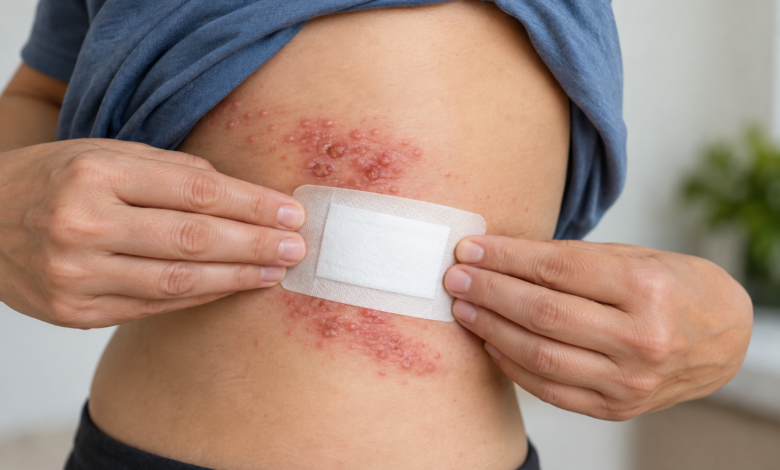
The rash usually stays on one side of the body. Often, it forms a band across the ribs or back. It can also show up on the face or neck. First comes redness, followed by small bumps. Next, these bumps turn into blisters filled with liquid. Eventually, the blisters dry up and form scabs.
How Shingles Spreads Today: Touch, Air, and Everyday Contact
Now let’s answer the keyword question in detail.
Touch: The Main Way the Virus Moves
The liquid inside the blisters carries the virus. If that liquid reaches another person, infection can follow. Usually, this happens through direct contact. For instance, someone touches an open blister or handles a bandage soaked with fluid. After that, the virus reaches their skin, eyes, nose, or mouth through their hands.
Think of it like this. The rash is the source. Your hands are the delivery system.
Common examples include:
- Changing a dressing for a relative and skipping hand washing afterward
- Pressing against a leaking blister during a hug
- Sharing a towel that touched the rash
- Rubbing your face right after touching the blisters
By contrast, healthy skin does not carry the same risk. A quick handshake is not the issue. The blister is.
Air: Why It Is Mostly a Rare Case
Many people ask about the air because chickenpox spreads that way. In fact, chickenpox moves easily from person to person through the air. Shingles, however, follows a narrower path. In most cases, the rash stays in one area. Therefore, the virus stays tied to the blister liquid. As a result, everyday airborne spread is unlikely.
There is one exception, though. Some people with very weak immune systems develop a widespread form of shingles. Doctors call it disseminated shingles. In those cases, the virus can travel more widely. Because of this, hospitals use extra safety steps for these patients. For a healthy person with a small, covered rash, however, the air is not the main concern.
Shared Rooms, Seats, and Surfaces
What about an office chair or a family sofa? Luckily, the risk is low. A covered rash keeps the liquid contained. Also, the virus does not last long on dry surfaces.
Still, use common sense. For example, wash your hands after touching anything stained by the rash. Likewise, keep dirty laundry apart from the rest. Spread through saliva or nasal fluid is very rare. For daily life, therefore, focus on the blisters.
Shingles Contagious Timeline: A Stage-by-Stage Guide
You are not contagious for the whole illness. Instead, the risk follows a clear pattern.
Stage 1: Pain and Tingling Without Blisters
Early on, you feel odd sensations. However, no blisters exist yet. At this point, the virus is not spreading through the skin. So, you do not need to cut yourself off just because your skin tingles.
Stage 2: Fresh, Open Blisters
This is the high-risk stage. Here, blisters are new, wet, and sometimes leaky. Contact with them can pass the virus along. Typically, this stage lasts around a week. During these days, cover the rash. Also, stay away from anyone who could get seriously ill.
Stage 3: Scabs Form
Soon the blisters dry out. Within seven to ten days, scabs usually form. After every blister has crusted over, you can no longer spread the virus. Meanwhile, the rash may take two to four weeks to heal. Pain can last even longer. Still, the spreading window is much shorter than the whole illness.
A simple rule helps. Wet blisters are risky. Dry scabs are not.
Why the Virus Wakes Up Years Later
If chickenpox ends in childhood, why does shingles strike in adulthood? The answer is your immune system. Think of it as a guard. As long as the guard stays strong, the virus sleeps. When the guard weakens, however, the virus can wake up.
Several things can lower your defenses:
- Getting older
- Serious illness
- Cancer treatment
- Medicines that calm the immune system
- Long periods of heavy stress
- Pregnancy
For this reason, shingles is common after age 50. Immune strength, after all, fades slowly with age.
Can the Chickenpox Vaccine Lead to Shingles?
Rarely, yes. The chickenpox vaccine contains a weakened version of the virus, and that version can stay in the body too. Even so, the chance is lower than after a natural chickenpox infection. For that reason, doctors still recommend the vaccine for children. It prevents a lot of illness.
Who Should Be Extra Careful Around Shingles in 2026
Some groups face a higher risk of serious illness. Therefore, if you have active blisters, think about who is nearby.
Pregnant Women Without Immunity
Pregnancy changes the immune system. As a result, a woman who never had chickenpox or the vaccine is more exposed. The CDC advises special care here. If you have blisters, keep your distance. Likewise, if contact happened, the woman should call her doctor.
Newborns and Premature Babies
Babies have young immune systems. Premature infants and babies with low birth weight are even more fragile. For this reason, some new parents step away from their babies during an outbreak. In 2018, Lin-Manuel Miranda made headlines by doing exactly that. His choice was careful, not an overreaction.
People With Weak Immune Systems
Some people cannot fight infections well. This includes:
- People getting chemotherapy
- Transplant patients
- Those taking medicines that lower immunity
- Anyone with certain immune conditions
For them, even a small exposure matters. Therefore, they should avoid open blisters. They should also ask a doctor about any contact.
Adults With No Chickenpox Protection
Adults who never had chickenpox or the vaccine are also at risk. In fact, chickenpox can hit adults hard. Protection, therefore, matters.
Smart Prevention Habits for Home, Work, and School
The good news is simple. A few habits cut the risk by a lot.
Cover the Rash Every Time
Use a clean, loose dressing. Make sure every blister is hidden. Also, change it when it gets damp. Afterward, seal used dressings in a bag before tossing them.
Wash Your Hands Often
Use soap and water. Wash after touching the rash. In addition, wash before you cook or eat. Finally, wash before you touch other people.
Do Not Scratch
Scratching breaks the blisters. Worse, it sends liquid to your fingers. To prevent this, keep your nails short. Soft, loose clothes help too.
Keep Personal Items Separate
Do not share towels, clothes, or bedding. Instead, wash everything in hot water.
Plan Around High-Risk People
During the open-blister stage, avoid babies, pregnant women without immunity, and people with weak immune systems. If contact cannot be avoided, cover the rash fully.
Think About Work and School
If your rash is on an exposed area, stay home until it is covered or scabbed. Take extra care if your job involves babies, patients, or older adults. Overall, these habits answer the real worry behind the question “is shingles contagious by touch or airborne.” Simply put, you control the touch risk by controlling the rash.
Shingles Vaccine in 2026: What Adults Should Know
Shingles and chickenpox come from one virus. However, they have separate vaccines.
The Shingles Vaccine
The shingles vaccine is meant for older adults. Specifically, it is recommended for people age 50 and older. Some younger adults with weak immune systems may need it as well. Moreover, the current shingles vaccine does not use a live virus. Because of this, it suits older people well. It prevents shingles in about 90 percent of the people who get it. Additionally, it can lower the risk of lasting nerve pain.
The Chickenpox Vaccine
The chickenpox vaccine is mainly for children. It is also about 90 percent effective against the virus. Adults who never had chickenpox can get it too.
Should You Ask Your Doctor?
Yes, if you are 50 or older. Likewise, ask if you have a weak immune system. The same goes for living near a baby or a pregnant woman. Since medical advice can change, check the latest guidance with your doctor or the CDC.
Red Flags: When to Get Medical Help Fast
Do not wait if you suspect shingles. After all, early treatment helps.
See a doctor soon if you have:
- A painful, one-sided rash
- Any rash near or around your eye
- New rash plus a weak immune system
- Severe pain
- Fast-spreading blisters
- Symptoms after age 60
Antiviral medicine works best when you start it early. In fact, doctors often aim for the first three days after the rash appears. As a result, early care can shorten the illness. It can also lower the chance of long-lasting nerve pain.
A rash near the eye is an emergency. Indeed, it can damage your vision. So, get care right away.
2026 Myths vs. Facts About Shingles Spread
Old ideas still float around online. Let’s clear up the biggest ones.
Some people think you can catch shingles from a hug. In reality, you can only catch the virus, and mainly through blister liquid.
Another idea says shingles is as contagious as chickenpox. Actually, it is much less contagious.
Others believe you are contagious from the first tingle. However, the risk starts when blisters appear.
Some claim scabs still spread the virus. In truth, spread stops once all blisters have crusted.
Finally, many assume only seniors get shingles. Older adults face the highest risk, but younger adults can get it too.
Frequently Asked Questions
Is shingles contagious by touch or airborne for most people?
For most people, touch is the main route. The virus spreads through contact with fluid from open blisters. Airborne spread, by contrast, is rare.
Can I catch shingles from someone who has it?
Not shingles itself. You can catch the virus, though. If you have no protection against chickenpox, you may get chickenpox first.
Is it safe to sit near someone with a covered rash?
Usually, yes. In fact, the risk is very low. Just avoid touching the rash or anything soaked with fluid.
How long does the contagious period last?
It lasts from the time blisters appear until they scab over. Typically, this is seven to ten days.
Can someone with shingles be near a baby?
It is wise to avoid close contact during the open-blister stage. Newborns are the most at risk. Although a covered rash lowers the risk, distance is safer.
Can you get shingles more than once?
Yes. It is uncommon, but it can happen.
Does the shingles vaccine make you contagious?
No. The current shingles vaccine does not use a live virus.
The Bottom Line
So, is shingles contagious by touch or airborne? Touch is the real concern. The virus spreads through liquid from active blisters. Airborne spread, meanwhile, is rare and linked to severe cases.
You are only a risk while blisters are open. Before they form and after they scab, the danger is very low.
Protecting others is simple. Cover the rash. Wash your hands. Do not scratch. Also, keep your distance from babies, pregnant women, and people with weak immunity until the blisters dry.
Shingles is painful, but it is manageable. Therefore, see a doctor early. Ask about vaccination, too. Above all, let facts guide you, not fear.
Medical disclaimer: This article is for general information only and is not medical advice. Please talk to a doctor about your own symptoms and health.
read more: https://dailyblogwriter.com/
